Blunt, joint, and wrap
A joint is flower in thin paper. A blunt is flower in a broader leaf or wrap, so the piece is typically larger and burns more slowly than a joint. A traditional blunt uses a tobacco wrap; that wrap is leaf, and the leaf is what carries nicotine. A hemp wrap is the tobacco-free sheet. An infused pre-roll is a different construction: paper on the outside, with concentrate added to the fill, not a change to a hemp wrap.
What are Presidential Blunts?
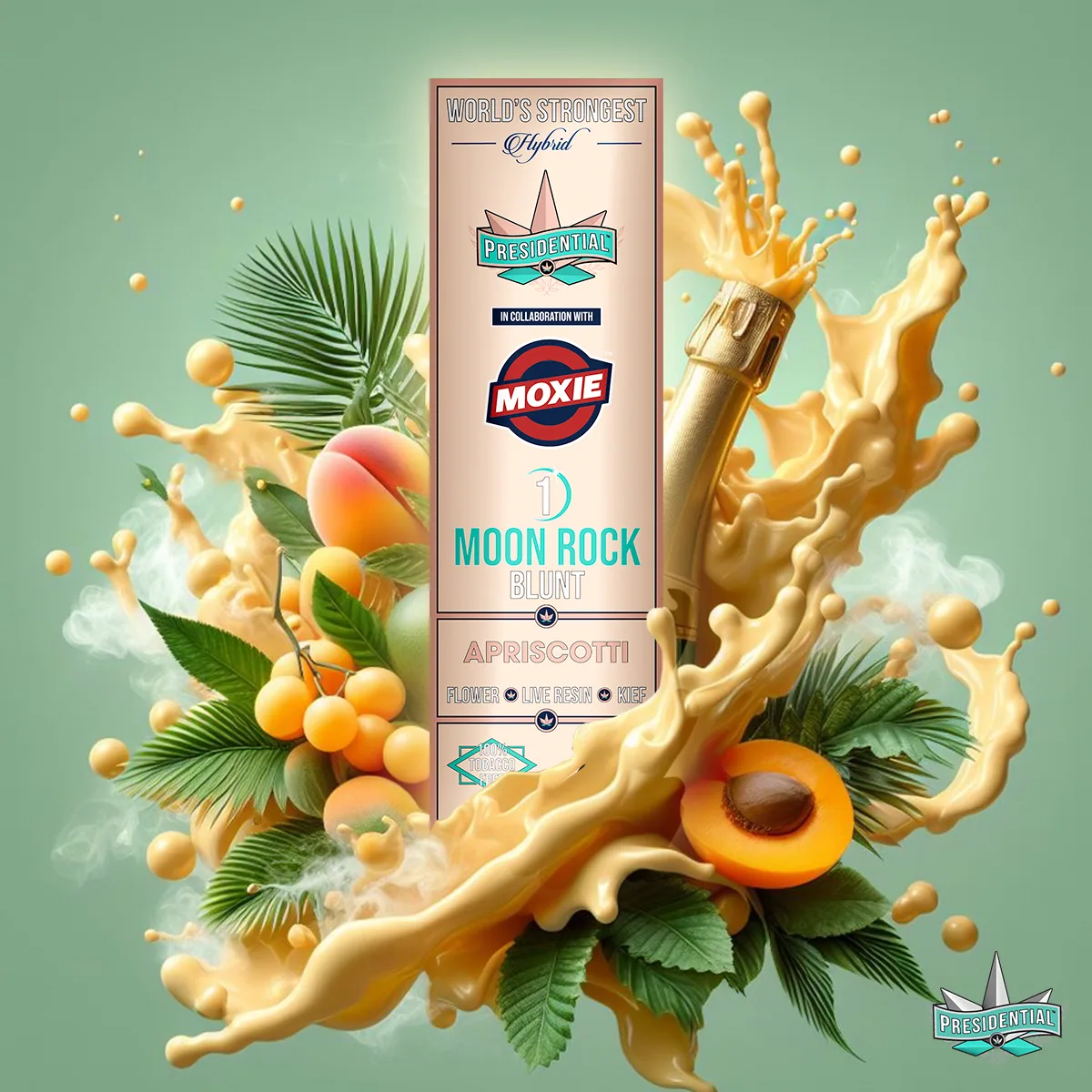
A Presidential Blunt consists of flower, concentrate, and kief packed inside a tobacco-free hemp wrap. Flower supplies the cannabis foundation, premium THC distillate can create the infused format, and kief completes the layered material. The thicker wrap distinguishes these rolls from paper pre rolls while keeping the blunt category focused on the product inside.
High potency is label literacy rather than a category-wide promise: the current package and batch test record provide cannabinoid information, ingredients, format, and product identity. Product quality and construction quality can differ by item, so the current package remains the reliable reference.
Read the build in that order—flower base, concentrate infusion, kief finish, hemp outer sheet—then move into the hubs when one part needs more depth. Construction language stays educational: no dosing claims, no invented lab percentages, and no substitute for the licensed label in your market.
Adults 21+ can treat this homepage overview as format literacy rather than a shopping cart: the infused blunt is defined by hemp wrap, layered fill, and slower burn, while named catalog items and licensed doors answer which product is currently available in a given market.
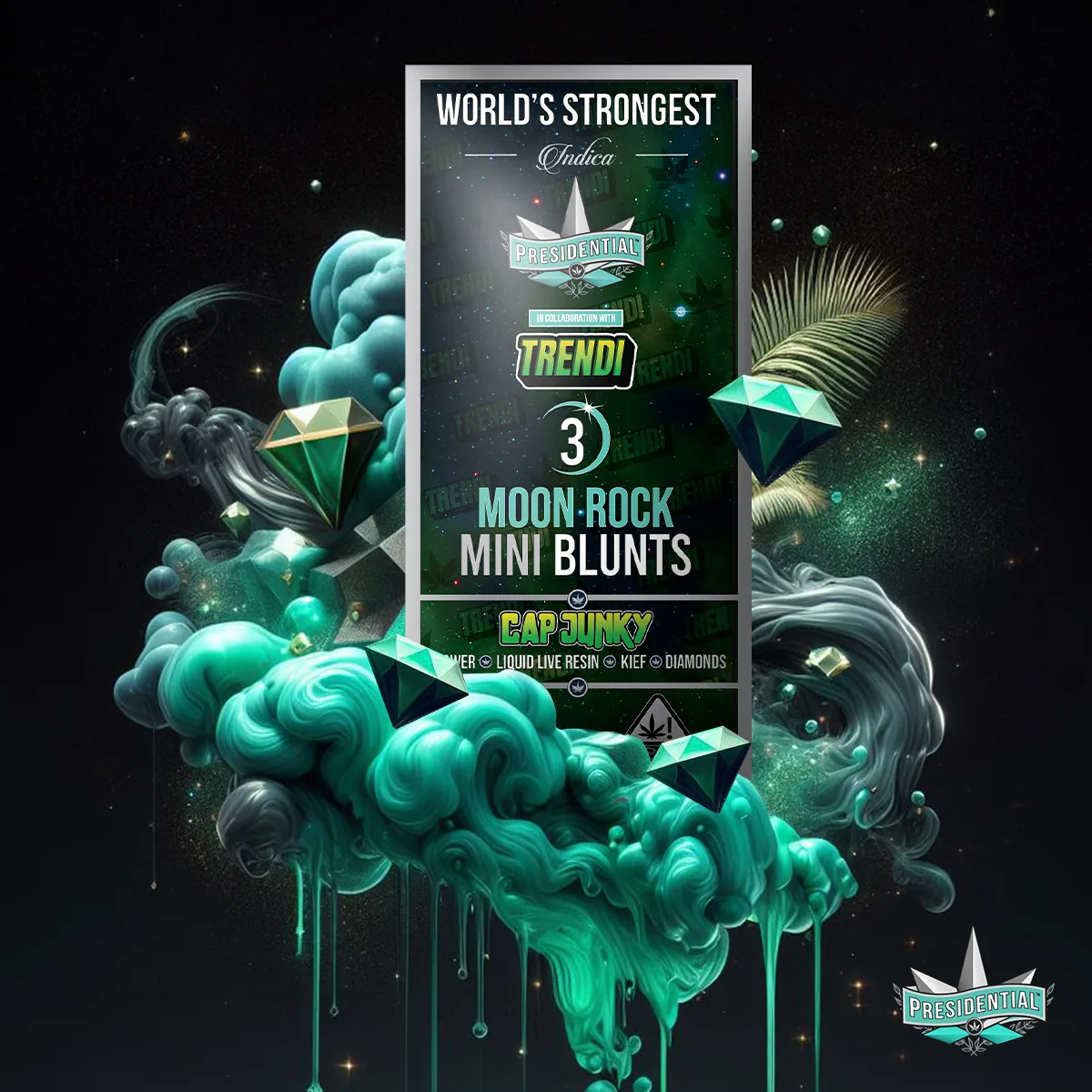
Browse every current Presidential blunt strain and product grouping.
Open the hemp wrap construction hub when the outer sheet, tobacco-free meaning, burn pace, or flavour window needs a dedicated guide.
Separate a blunt from a joint when wrap thickness, not just the rolled shape, is the question.
Keep tobacco out of the comparison with the blunt versus spliff guide.
Set the outer sheet beside rolling paper in the hemp wrap versus paper guide.
Use the compare rolled formats hub for blunt versus pre-roll, mini versus full-size, and related construction contrasts.
Follow the ritual and session hub for lighting, relighting, storage, pacing, and sharing cues.
Read About Presidential Blunts for publisher identity, wholesale context, and why this educational reference exists.
Tobacco-free hemp-wrap construction
Presidential Blunts use hemp wraps rather than tobacco leaf. The wrap keeps the crafted infused fill packed securely and helps define the slower blunt format without adding tobacco or nicotine. Distinct flavors come from the flower, concentrate, kief, and the profile identified for the particular product. Check the current package for flavor details.
A blunt and a pre roll are related rolled-cannabis formats, but they are not interchangeable. Pre rolls use paper; Presidential Blunts use a broader hemp wrap. Full-size blunts and minis keep the same construction packed at different scales. The format page and package provide the reliable comparison.
When the outer sheet is the question—material, tobacco-free meaning, burn pace, or how flavour reads through a neutral wrap—continue in the Wrap hub. When size and format contrast matter more than the sheet itself, Compare keeps blunt, pre-roll, mini, and paper distinctions side by side without collapsing them into one product story.
Tobacco-free labeling stays with the wrap material itself. Confirm the current package for wrap composition and ingredients; this guide explains why hemp is used for blunt construction without inventing batch-level assay numbers beyond the published product facts.
Flower, concentrate, kief, and moon rock roots
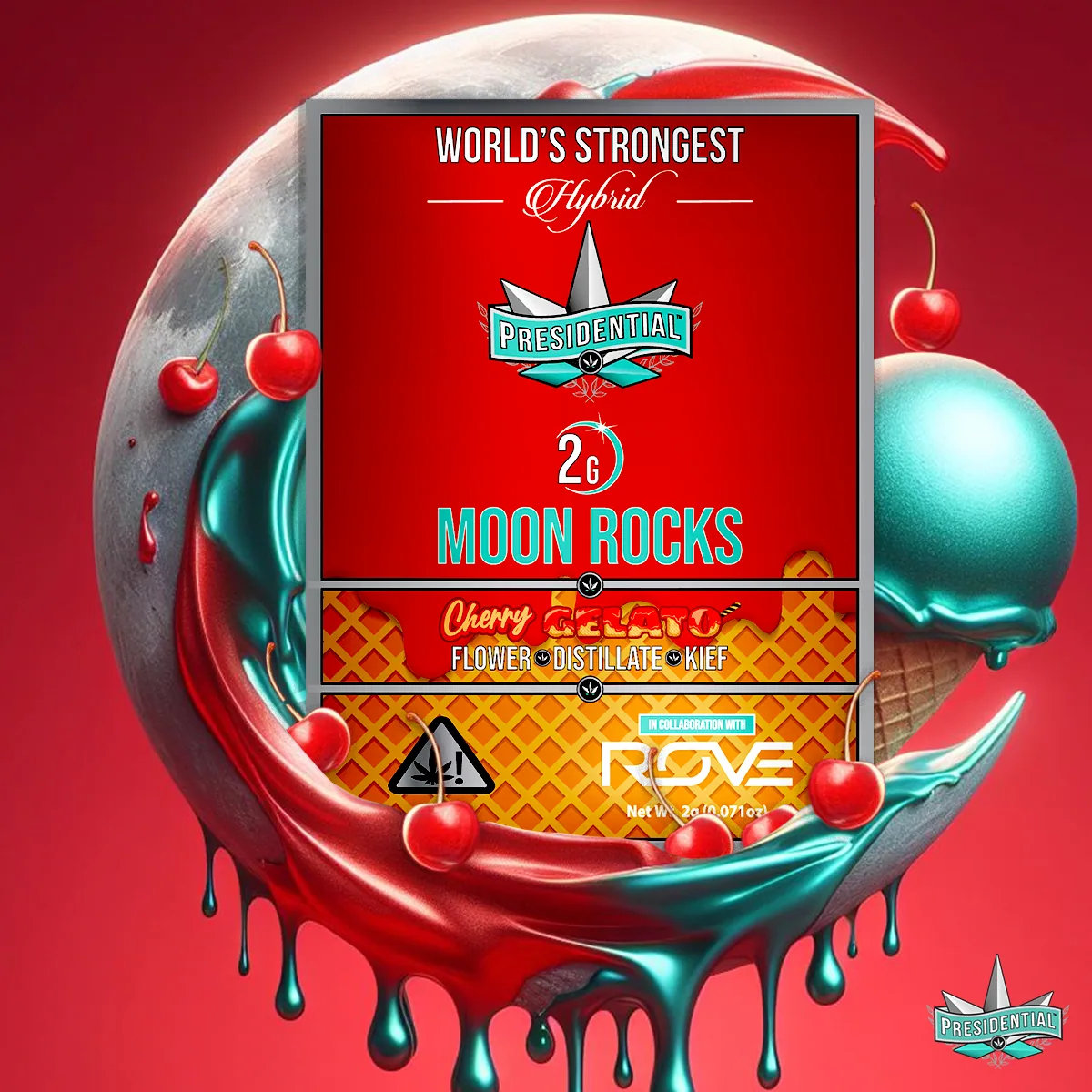
The three-layer idea connects Presidential Blunts with the brand's flagship moon rock format. A moon rock presents the layered cannabis material as a piece of flower, while a blunt carries infused material inside a ready-to-use hemp wrap. Both begin with flower and concentrate and finish with kief. In both formats, the infused cannabis inside leads the aroma and taste.
Even distribution matters more than repeating a category-wide potency number. Concentrate changes density and heat retention, so consistent placement supports a more uniform roll. Presidential names the brand, while indica, sativa, and hybrid describe cultivars: an indica or sativa label classifies the plant, and another indica or sativa reference still describes an indica cultivar rather than the company.
Named products live in the Strains hub, where catalog groupings keep Silver, Gold, Rose Gold, and related lines readable without treating brand identity as a cultivar. Session handling—how to store a blunt cool and dark, how to smoke it with even lighting and relights, pacing between puffs, and sharing—belongs in the Ritual hub so this homepage can stay the overview rather than a how-to manual.
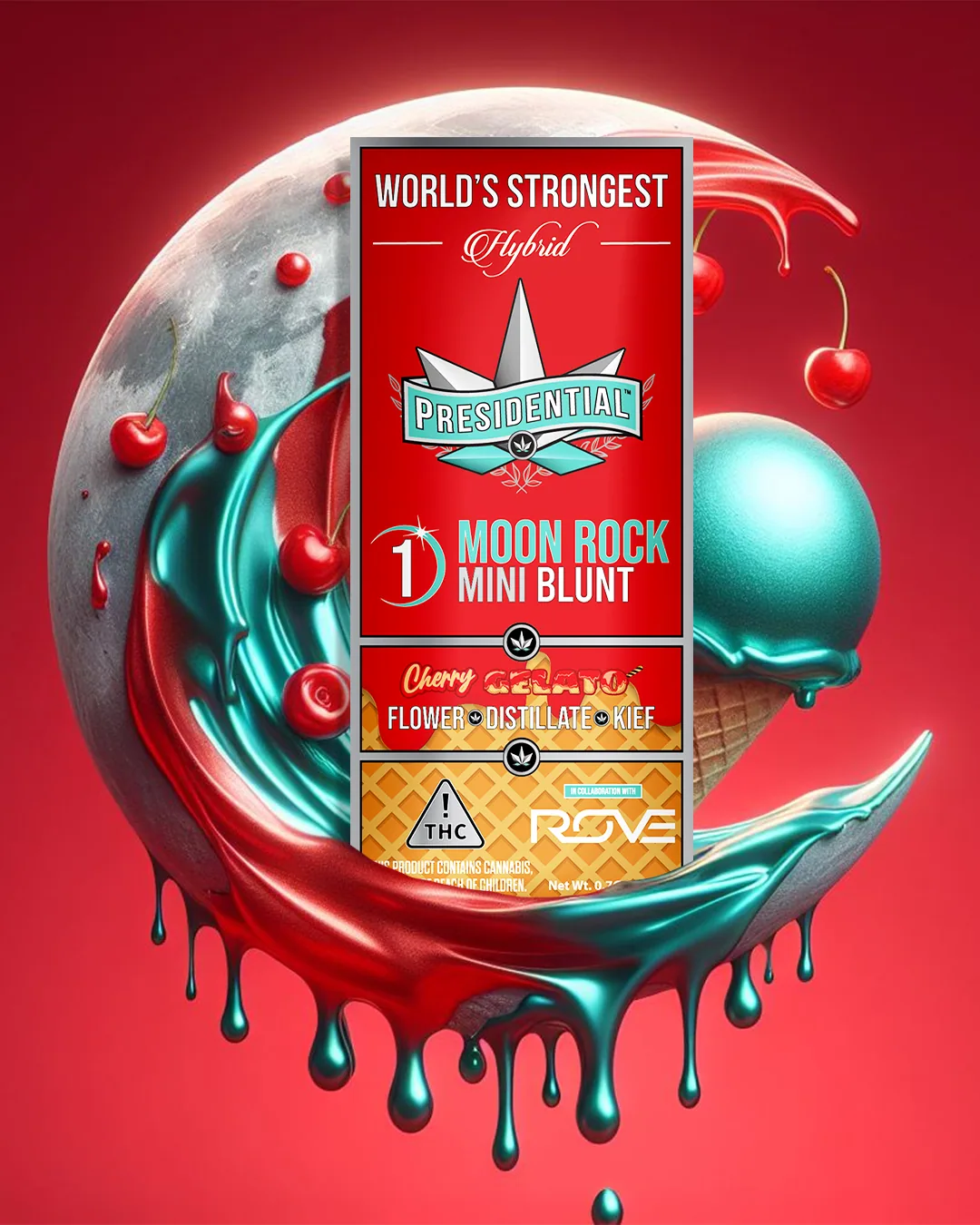
Compare Presidential products and find a licensed retailer
Use the Wrap guide for hemp construction, Compare for blunts versus pre rolls and minis, Ritual for handling and storage, and Strains for the current named catalog. Those focused pages carry the detail so this homepage can remain the clear starting point for Presidential Blunts.
Presidential operates through licensed cannabis retailers, where state market coverage, retail quality, and reputation shape the experience. Presidential Blunts reach customers through licensed retailers, and the Strains hub records the current named range. Each state has its own licensed-market footprint and retail experience. Availability varies by market, retailer, and product, so the experience begins with the current selection at a licensed door. Confirm the current selection with a licensed retailer. This website is an educational brand reference and does not sell or ship cannabis products.
For publisher context, wholesale footprint, and why this reference exists separately from the retail counter, read the About page.
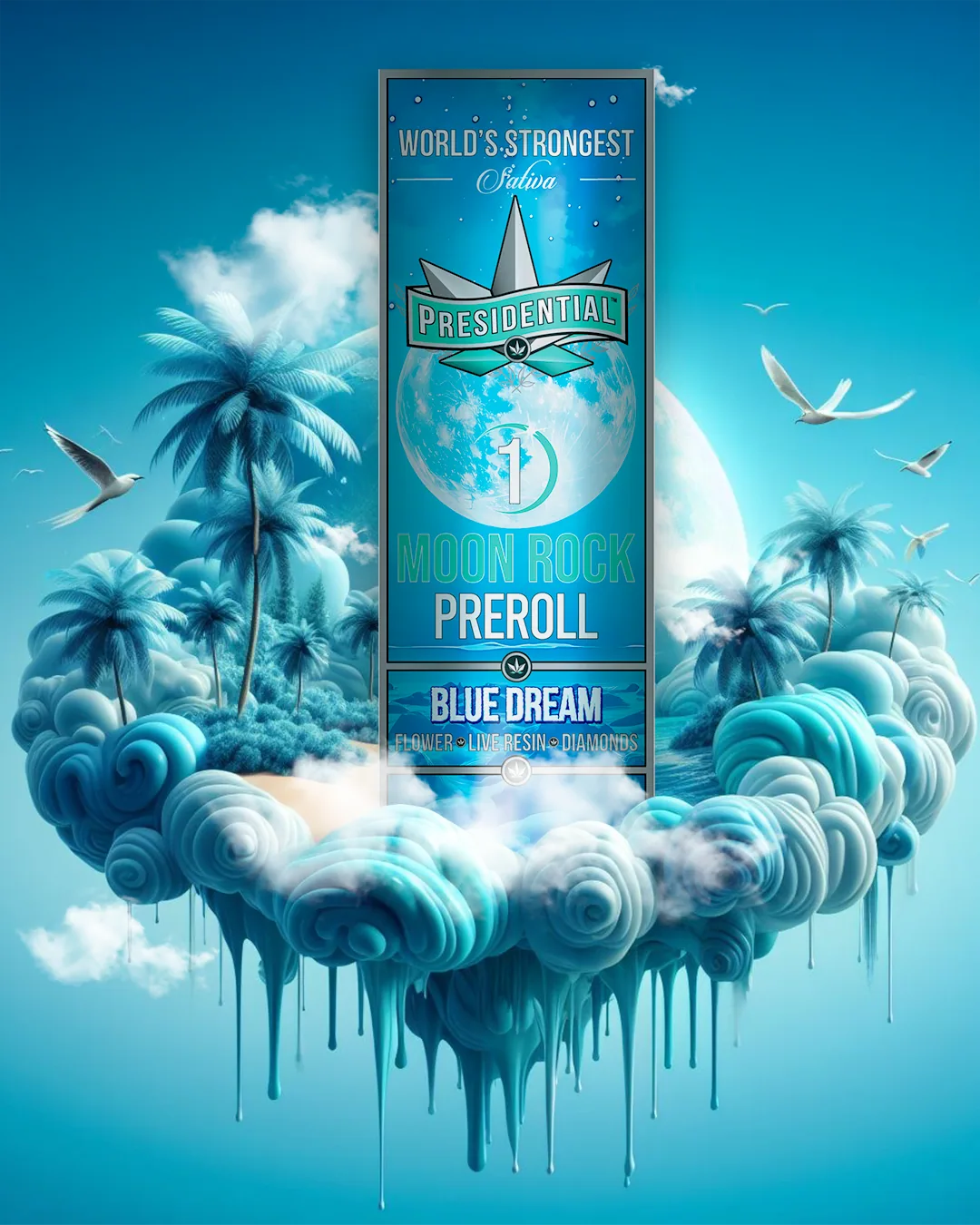
How the Presidential Blunts hubs nest under this guide
This pillar is the parent map. Five primary destinations nest under it for adult readers: Wrap for hemp construction, Compare for rolled-format contrasts, Ritual for session cues, Strains for named catalog groupings, and About for brand and publisher context. Child articles under each hub isolate one practical question—wrap jobs, burn rate, blunt versus pre-roll, lighting, storage, a single strain name—while linking back here when the next question spans more than one silo.
Browse in that practical order when you are new to the infused blunt format, or jump to the hub that matches the moment in hand. Construction questions start in Wrap; format choice continues in Compare; handling continues in Ritual; product names continue in Strains; company framing continues in About. Return to this homepage whenever you need the full Presidential Blunts overview in one place.
When a question spans two silos—for example wrap material and session pacing—return here first, then follow the hub links in sequence so construction and ritual stay distinct rather than merged into one undifferentiated product story.
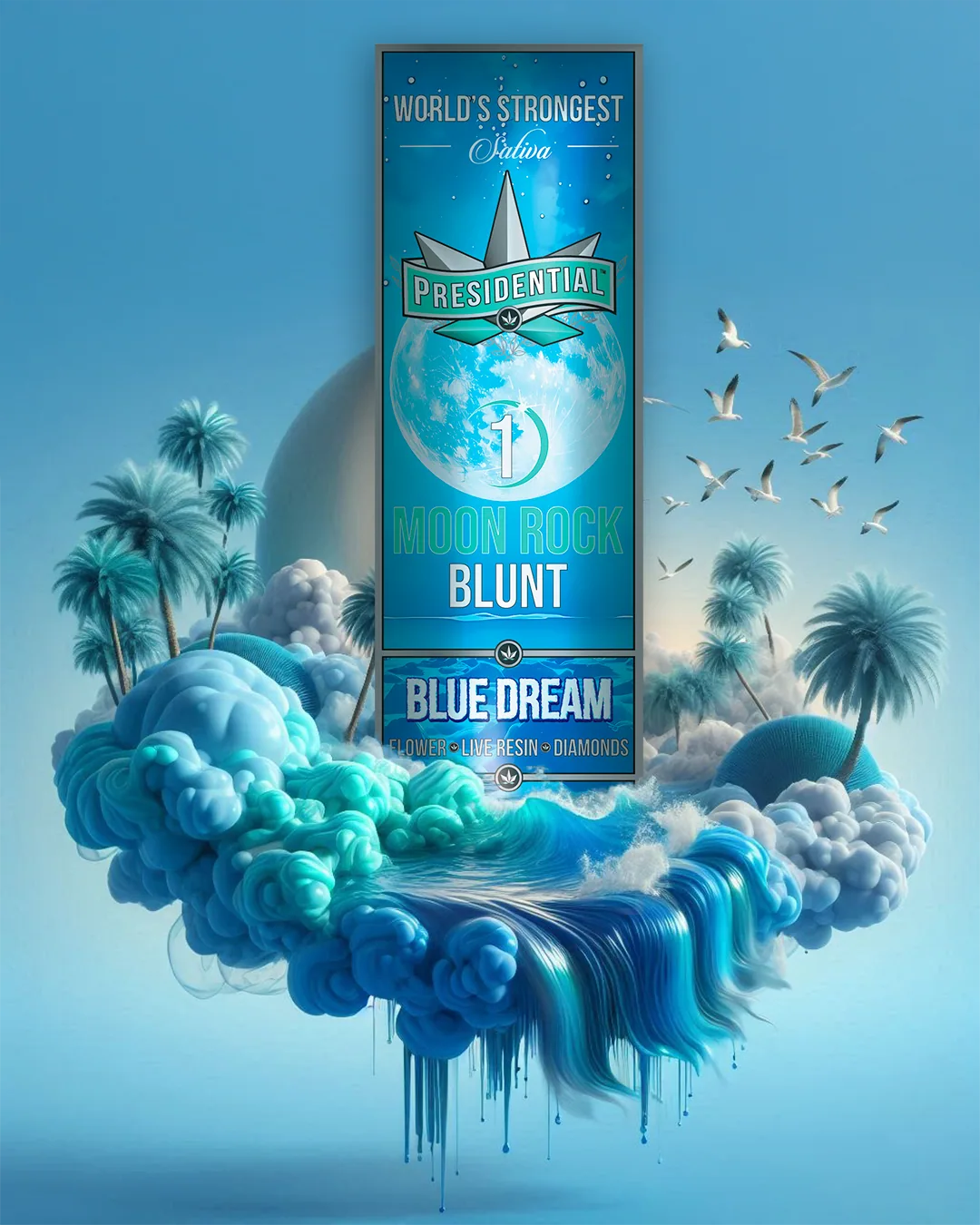
Keep the brand, the plant label, and the format apart
The names on this page do not stand in for each other. Presidential is the brand, while indica, sativa, and hybrid only classify the plant inside the catalog. Silver, Gold, and Rose Gold organize named lines; they do not choose the outer sheet. That sheet is its own fact: a tobacco-free hemp wrap when the format is a blunt, and paper when the format is a pre-roll. A moon rock presents the same flower, concentrate, and kief as a piece of flower rather than inside that wrap. Full-size blunts and minis keep the blunt construction and change the scale.
A slower burn follows the broader wrap and the denser infused fill, not the brand name or the cultivar label. The current package and batch test record still hold cannabinoid information, ingredients, and product identity; high potency is not a category-wide promise. Adults 21+ can use this page to sort those columns, then confirm availability with a licensed retailer. This site does not sell or ship cannabis, and it does not turn the format into dosing advice.
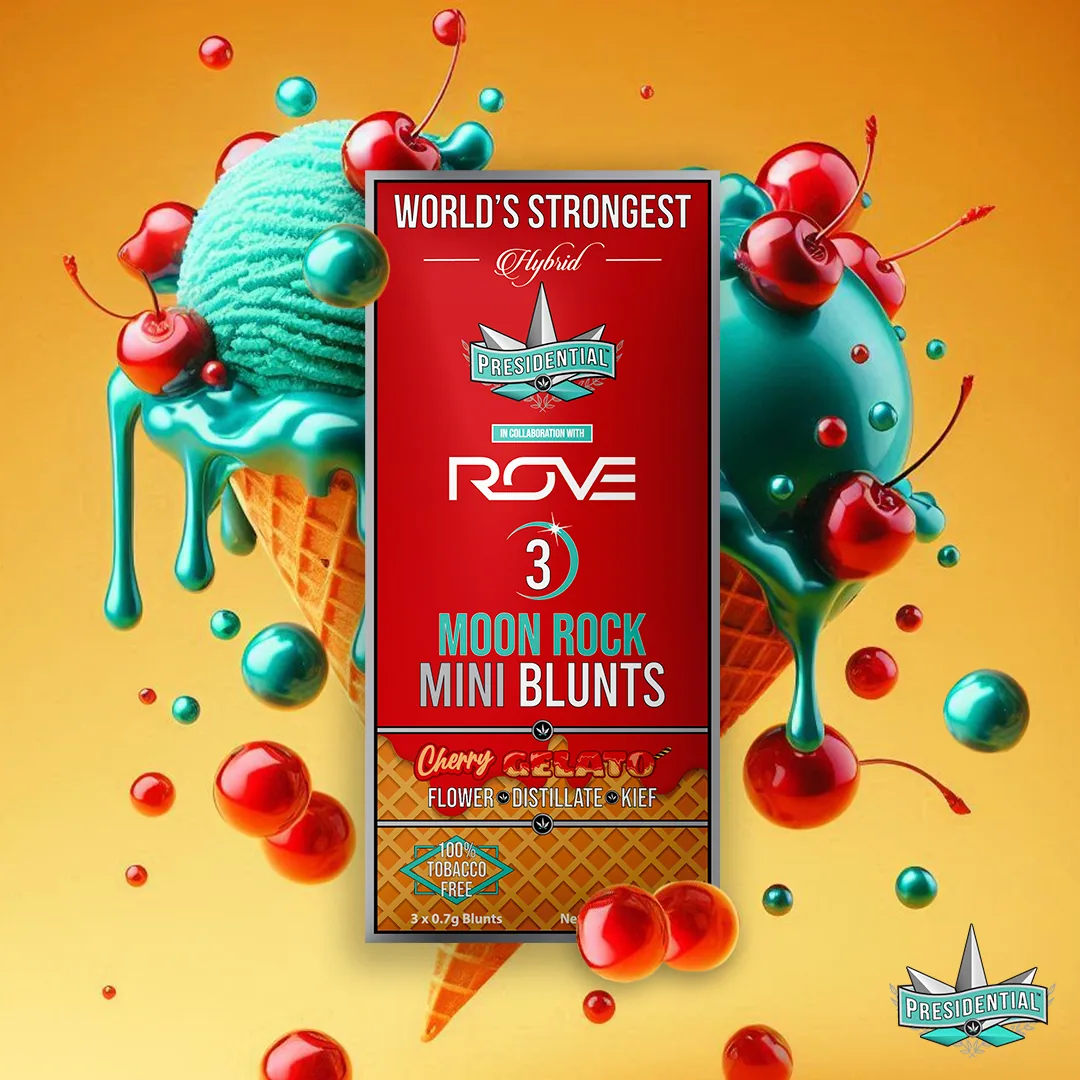
Frequently Asked Questions
What are Presidential Blunts?
Presidential Blunts are tobacco-free hemp-wrap infused blunts from Presidential Cannabis. They combine flower, concentrate, and kief in full-size and mini formats.
Are Presidential Blunts tobacco-free?
Yes. Presidential Blunts use hemp wraps rather than tobacco leaf. Confirm the current product and ingredient information on its package.
How are Presidential Blunts different from pre rolls?
Presidential Blunts use hemp wraps, while pre rolls use paper. Both can carry infused cannabis, but their outer construction and format are different.
Where can adults find Presidential Blunts?
Presidential Blunts are sold only through licensed cannabis retailers. Availability varies by location and product, so confirm with the retailer.